 how-to
Side Effects of Spravato Monitoring: A Patient Guide
Table of Contents
- What Spravato Monitoring Involves and Why It Matters
- Spravato REMS Program Requirements: What the FDA Mandates
- Common Side Effects You May Notice During Monitoring
- The Spravato Post-Dose Observation Period: A Step-by-Step Look
- Blood Pressure Monitoring During Esketamine Treatment
- How to Prepare for Your Spravato Monitoring Session
- Conclusion: Partnering With Your Care Team for Safety
- Frequently Asked Questions
Last Updated: September 27, 2026
What Spravato Monitoring Involves and Why It Matters
Spravato monitoring is the supervised observation period that follows every dose of esketamine nasal spray, and it exists because the side effects of Spravato monitoring can appear quickly and fade just as fast. At Trust and Care Mental Health Inc, we treat that window as the treatment itself, not paperwork around it. The FDA requires it for a reason: this drug can cause dissociation, sedation, and short spikes in blood pressure within the first two hours.
The Difference Between Acute and Long-Term Effects
Acute effects show up within minutes to hours of a dose. They include dissociation, dizziness, nausea, sedation, and a temporary rise in blood pressure. These fade as the drug clears your system, usually within the same visit.
- Acute: onset in 10-40 minutes, resolves within 2 hours
- Long-term: subtle, cumulative, tracked across sessions
- The monitoring plan targets the first, your care team tracks the second
Spravato REMS Program Requirements: What the FDA Mandates
The Spravato REMS program requirements are set by the FDA and are not optional for any clinic. REMS stands for Risk Evaluation and Mitigation Strategy, a safety program the FDA requires for drugs with serious risks that need controlled access. For esketamine, that means certified clinics, trained staff, and a mandatory observation period after every dose.
- Certified clinic and pharmacy
- Two-hour minimum observation
- Staff trained to spot and respond to adverse events
- A signed patient enrollment form
Common Side Effects You May Notice During Monitoring
The most common side effects fall into a short list, and most patients experience only a few of them. Dissociation tops the list, followed by sedation, dizziness, nausea, headache, and a temporary rise in blood pressure. These are expected, tracked, and treated as part of the session.
| Side Effect | When It Peaks | How Long It Lasts | What Helps |
|---|---|---|---|
| Dissociation | 20-40 min after dose | 30-60 minutes | Calm room, dim light |
| Sedation | 30-60 min after dose | 1-2 hours | Reclining, no driving |
| Dizziness | During rise | Under 1 hour | Slow position changes |
| Nausea | Early | Under 1 hour | Small sips, anti-nausea meds |
| Blood pressure rise | 20-40 min after dose | 1-2 hours | Rest, repeat checks |
| Headache | Later in visit | Hours | Hydration, rest |
Managing Dissociation and Sedation
Dissociation is the one people ask about most. It can feel like your body and mind are slightly out of step, or like you're watching yourself from a short distance. It sounds alarming, but it is usually mild and temporary.
Here's what helps during the monitoring window:
- Keep your eyes closed and focus on slow breathing
- Ask for the lights dimmed and the room quiet
- Tell the nurse the moment it feels stronger than expected
- Skip screens and phone scrolling until it passes
- Stay reclined rather than sitting upright
The Spravato Post-Dose Observation Period: A Step-by-Step Look
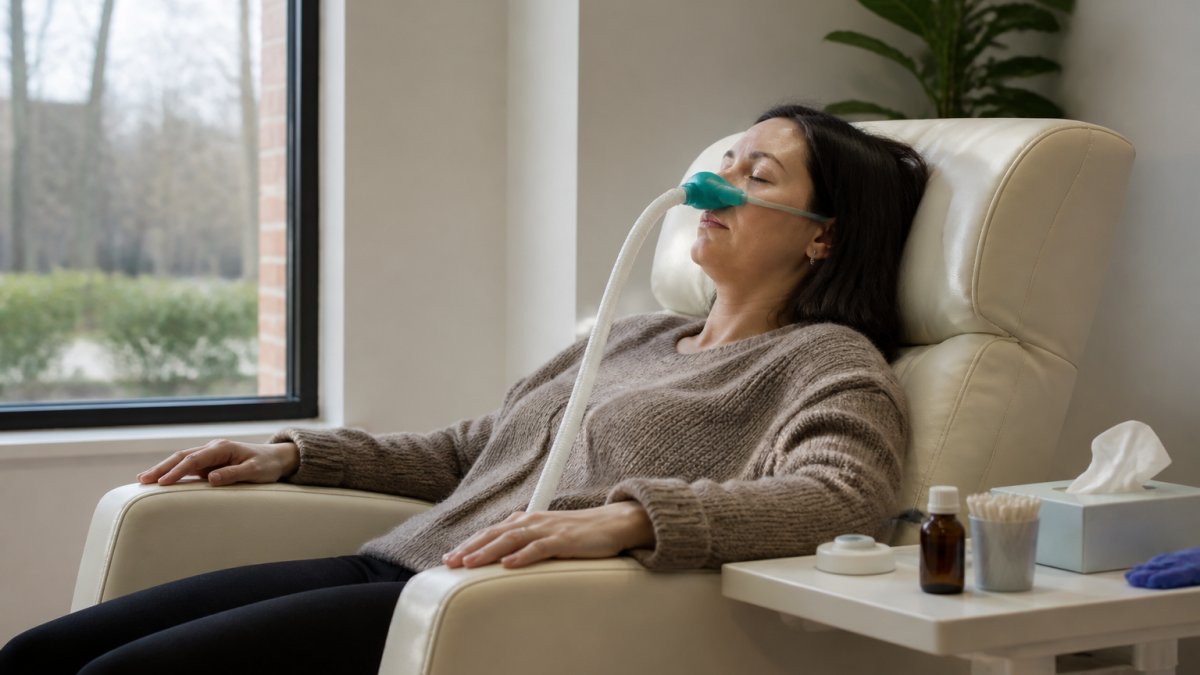
The Spravato post-dose observation period is a fixed two-hour block where staff watch for side effects and confirm you're stable before you leave. The steps are the same every visit, which is part of what makes the experience predictable. What most guides skip is what those two hours actually feel like from the recliner, so here's the clinical sequence and the lived experience side by side.

The clinical sequence
- Check in and get your baseline blood pressure, heart rate, and vitals
- Receive the nasal spray under supervision, one nostril at a time, with a short gap between sprays
- Rest and stay seated for the first part of the observation
- Get checked at set intervals for blood pressure, alertness, and coordination
- Report any dissociation, nausea, or dizziness as it happens
- Complete the full observation before you're cleared to leave
- Arrange your ride home, since you cannot drive
What the two hours actually feel like
- Minutes 0-10: The spray itself is quick and mostly tasteless, though some patients notice a bitter drip at the back of the throat. You'll be asked to sit back and stay put.
- Minutes 10-40: This is when dissociation and the blood pressure rise typically peak. The room usually stays dim, staff keep their voices low, and you may be checked two or three times in this stretch. Many patients describe it as a floaty, slightly removed feeling rather than anything frightening.
- Minutes 40-90: The acute effects usually soften. Nausea, if it comes, tends to show up here. This is a good window to sip water and let the nurse know how you're tracking.
- Minutes 90-120: Alertness and coordination are rechecked. You'll be asked to walk a few steps or track a finger with your eyes before you're cleared. Most people feel close to baseline by the end of this block.
What the environment is usually like
Blood Pressure Monitoring During Esketamine Treatment
Blood pressure monitoring during esketamine treatment is one of the core safety protocols, because esketamine can cause a transient blood pressure elevation. That means a short, temporary rise, not a lasting change. Staff check your pressure before the dose and again at set points afterward.
- Baseline reading before every dose
- Repeat checks across the observation window
- Rest and recheck if a reading is high
- Medical review before continuing if readings stay elevated
How to Prepare for Your Spravato Monitoring Session
Preparation makes a real difference in how smooth the visit feels. A few small steps before you arrive can lower your odds of a rough session, and a few common mistakes can turn a routine appointment into a stressful one. Below is a printable checklist plus the reasoning behind each item, so you know what actually matters and why.
The night before
- Confirm your ride home. This is non-negotiable, you cannot drive yourself, and clinics will not release you to a rideshare you booked on the spot if you're still sedated.
- Clear the rest of your day. Plan for the full two hours plus travel, and don't schedule anything that requires sharp focus afterward.
- Set out comfortable clothing you can recline in, nothing tight around the waist or neck.
- Pack a small bag: water, an eye mask, a light blanket, and any prescribed anti-nausea medication your provider has approved.
- Write down any side effects from your last session so you can share them at check-in.
The day of
- Skip heavy meals right before your dose. A light snack a couple of hours ahead is usually fine; a large meal tends to make nausea worse.
- Take your regular medications unless your provider has told you otherwise. Do not stop a blood pressure medication on your own, that conversation belongs to your prescriber.
- Avoid alcohol and recreational drugs before and after. Both can amplify sedation and blood pressure swings.
- Arrive early enough that you're not rushed. Rushing raises blood pressure before you've even been dosed.
- Leave the car keys at home. Hand them to whoever is driving you.
Common mistakes that make the visit harder
- Treating it like a quick errand and booking a meeting for right after
- Skipping the ride arrangement and hoping to "see how you feel"
- Drinking a large coffee on the way in, which can push blood pressure up before the dose
- Staying on your phone through the peak dissociation window
- Not telling the nurse when something feels stronger than expected
What to bring vs. what to leave
| Bring | Leave at home |
|---|---|
| Water bottle | Car keys |
| Eye mask and light blanket | Work laptop |
| List of side effects from last visit | Anything requiring you to drive |
| Approved anti-nausea medication | Alcohol |
| Comfortable layers | Heavy meal |
Conclusion: Partnering With Your Care Team for Safety
The side effects of Spravato monitoring are real, but they are also predictable and manageable when you're in the right setting. The two-hour observation isn't a formality. It's the layer of protection that lets you get the benefit of the treatment without carrying the risk alone.
Frequently Asked Questions
What are the most common side effects observed during Spravato monitoring?
The most frequently reported side effects during Spravato monitoring include dissociation, dizziness, nausea, sedation, and a temporary increase in blood pressure. These effects typically begin shortly after intranasal administration and are short-lived. Your healthcare provider monitors you closely to manage any discomfort and ensure your safety throughout the observation period.
Why is a two-hour monitoring period required after Spravato administration?
The two-hour observation period is mandated by the FDA's REMS program to monitor for serious side effects like dissociation, sedation, and blood pressure changes. This window allows healthcare providers to intervene if needed and ensures you are stable before leaving. It is a critical safety protocol, not just a formality, and helps prevent complications post-administration.
How does the REMS program ensure safety during Spravato treatment?
The Spravato REMS program requires that treatment only occur in certified healthcare settings under the supervision of a qualified provider. Patients must be monitored for at least two hours after each dose. The program also mandates specific blood pressure checks and restricts dispensing to certified pharmacies. These requirements ensure consistent safety protocols across all treatment sites.
What should I do if I experience side effects during my Spravato session?
If you experience side effects like dissociation or dizziness during your session, inform your healthcare provider immediately. They may adjust your position, provide reassurance, or in rare cases, administer supportive care. Most effects resolve on their own within the observation period. Never attempt to drive or leave until your provider confirms it is safe.