 blog
blog
Ketamine vs Esketamine for Depression: Key Differences
Table of Contents
- What Is Ketamine and What Is Esketamine?
- FDA Approval Status of Ketamine for Depression
- Spravato Treatment Process: What a Session Actually Looks Like
- Ketamine vs Esketamine: Administration, Onset, and Side Effects
- How Long Does Esketamine Treatment Last?
- Insurance Coverage for Spravato and Ketamine
- Contraindications, Drug Interactions, and Monitoring
- Which Option Fits Your Situation?
- Frequently Asked Questions
Last Updated: September 20, 2026
What Is Ketamine and What Is Esketamine?
The difference between ketamine and esketamine for depression comes down to molecular structure, but the practical gap is bigger than that sounds. Ketamine is a medication that has been used for anesthesia since the 1970s and is now used off-label for depression. Esketamine is a refined version of one part of that molecule, and it is FDA-approved as a nasal spray for depression.
Here is the key point most people miss.
The Mirror-Image Molecule Difference
Think of the two molecules as a left hand and a right hand. They look almost identical, but they are not the same shape. Ketamine contains both. Esketamine contains only the S-enantiomer.
FDA Approval Status of Ketamine for Depression
Esketamine is FDA-approved for depression. Ketamine is not. That is the single biggest regulatory difference between the two.
FDA approval of esketamine nasal spray for depression
Off-Label Use vs. Approved Indication
Ketamine is approved as an anesthetic. When a clinic uses it for depression, that is off-label use. This is legal and common in medicine, but it means the FDA has not reviewed ketamine specifically for depression.
What does that mean for you in practice?
- Esketamine comes with a required safety program and standardized dosing.
- Ketamine for depression has no single national standard. Protocols vary by clinic.
- Insurance generally covers the approved option and rarely covers the off-label one.
Spravato Treatment Process: What a Session Actually Looks Like
Most comparisons stop at the molecule and never tell you what the appointment itself feels like. That is the part patients actually plan their week around, so here is the day-of experience for both treatments side by side.

The Spravato (Esketamine) Session
A Spravato session is a monitored appointment, not a quick spray and go. You sit in a reclining chair in a private room, and a clinician stays with you for about two hours from the first spray until your vitals are stable.
Here is the typical flow:
- Check-in and baseline vitals. A nurse records your blood pressure, heart rate, and how you feel that day. If your blood pressure is too high, the dose may be held.
- The dose. You self-administer the nasal spray under direct supervision, one spray at a time, alternating nostrils, with a short pause between sprays.
- Onset. Dissociation, a floaty, detached, or dreamlike feeling, usually begins within 10 to 20 minutes and is expected, not a sign something is wrong.
- Monitoring. Staff check your blood pressure roughly every 20 to 30 minutes and watch for sedation or distressing dissociation.
- Rest and observation. You stay until the acute effects fade and your blood pressure returns toward your baseline, typically around the two-hour mark.
- Ride home. You cannot drive yourself, so arrange a ride in advance.
The IV Ketamine Session
An IV ketamine infusion for depression is a different rhythm. You are usually in a reclining chair or bed with an IV line placed in your arm. The infusion typically runs over roughly 40 minutes, though protocols vary by clinic. Because the drug goes straight into the bloodstream, the psychoactive effects tend to come on faster and can feel more intense than the nasal spray.
What the Difference Feels Like
A common pattern patients describe is that the nasal spray feels more gradual and the IV infusion feels more immediate. Neither is "better", they are different curves. The practical takeaway is that both treatments require a cleared calendar for the rest of the day, a ride, and a quiet place to recover.
Ketamine vs Esketamine: Administration, Onset, and Side Effects
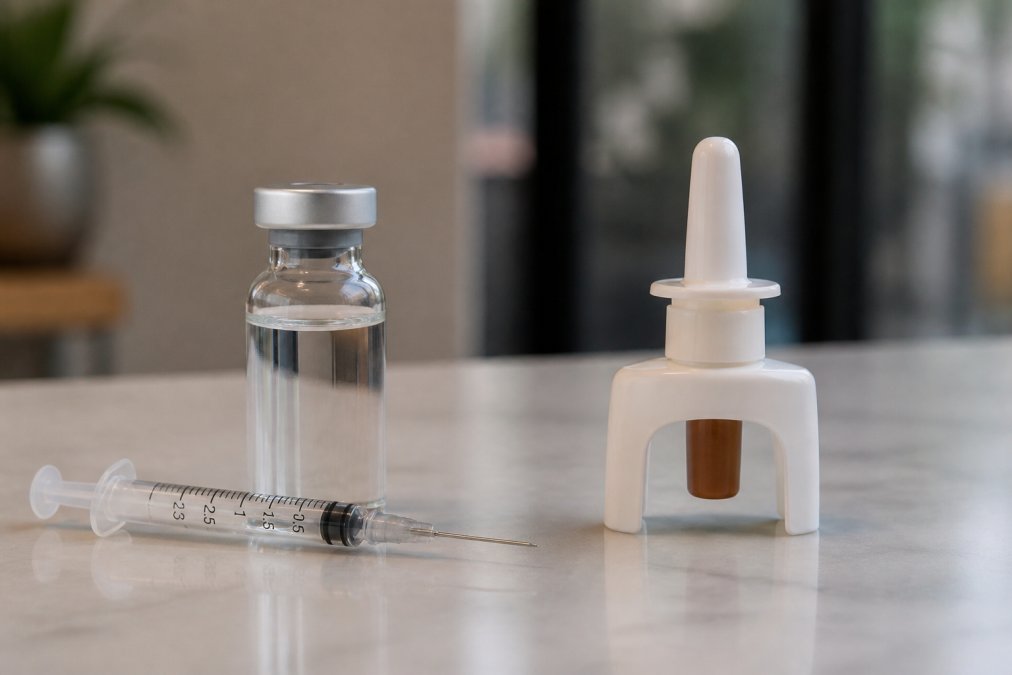
The ketamine vs esketamine comparison changes fast once you look at how each one enters the body. Ketamine is usually given as an intravenous infusion. Esketamine is given as an intranasal spray.
Bioavailability and Dosing Frequency
Bioavailability means how much of a drug actually reaches your bloodstream. An IV infusion delivers the full dose directly. A nasal spray absorbs through the lining of the nose, so less gets in.
That difference shapes the schedule:
| Feature | Ketamine (IV) | Esketamine (nasal spray) |
|---|---|---|
| How it is given | Intravenous infusion | Intranasal spray |
| FDA approval for depression | No (off-label) | Yes |
| Typical early frequency | Varies by clinic | Twice weekly to start |
| Monitoring required | Yes | Yes, in a certified setting |
| Driving after session | Not allowed | Not allowed |
How Long Does Esketamine Treatment Last?
Esketamine treatment usually starts with twice-weekly sessions for the first month, then tapers to weekly and eventually every other week. The exact schedule depends on how you respond.
Insurance Coverage for Spravato and Ketamine
Insurance coverage is the practical barrier that decides treatment for many people, and most articles wave at it without explaining how to actually get through it. Here is the real mechanics.
How Coverage Usually Splits
Most commercial plans cover Spravato (esketamine) because it is FDA-approved for treatment-resistant depression. Ketamine infusions for depression are usually not covered, because the use is off-label, the plan sees an anesthetic being used for a psychiatric indication it never reviewed.
That split creates two very different patient journeys:
- Spravato: coverage is common, but it is gated behind prior authorization and a certified REMS site.
- IV ketamine: coverage is rare, so most patients pay out of pocket, and pricing varies widely by clinic and region.
The Prior Authorization Path for Spravato
Prior authorization is the step that stalls most Spravato starts. A typical sequence looks like this:
- Diagnosis and documentation. Your clinician documents treatment-resistant depression, usually meaning at least two prior antidepressant trials that did not work, along with your current symptoms and history.
- Site verification. The clinic must be enrolled in the Spravato REMS program, because the drug can only be dispensed to certified sites.
- Submission. The clinic submits the prior authorization with the diagnosis, prior medication history, and a treatment plan.
- Payer review. The plan reviews against its medical policy. This can take days to a few weeks.
- Possible denial and appeal. Denials are common on the first pass, often for missing documentation. An appeal with a fuller medication history frequently succeeds.
Questions to Ask Before You Start
- Is Spravato covered under my plan, and what is my copay per session?
- Does the clinic handle prior authorization for me, or do I need to push it?
- What happens if my plan denies the claim, who files the appeal?
- Is there a manufacturer patient support program I may qualify for?
- For ketamine: what is the all-in cash price per infusion, and does it include monitoring?
The Cost Reality
Because pricing depends on your plan, the number of sessions, and the clinic, we do not quote a flat number here. What we can say is that the coverage gap is the reason many patients end up choosing between an approved treatment they can partially insure and an off-label one they pay for entirely. Call Trust and Care Mental Health Inc to discuss your options.
Contraindications, Drug Interactions, and Monitoring
Safety screening comes before the first dose, not after. Both ketamine and esketamine raise blood pressure, so anyone with uncontrolled hypertension or certain heart conditions needs careful review.
- MAO inhibitors
- Stimulants and other antidepressants
- Drugs that increase blood pressure
- Sedatives and sleep medications
Which Option Fits Your Situation?
Esketamine fits best when you want an FDA-approved option with insurance support and a structured, monitored protocol. Ketamine may suit some patients, but it comes with off-label status and less predictable coverage.
Frequently Asked Questions
Is esketamine the same as ketamine?
No. Ketamine is a racemic mixture containing two mirror-image molecules, while esketamine is only one of those molecules, isolated and refined. This structural difference matters because esketamine binds more tightly to the NMDA receptor, which is linked to its antidepressant effects. Esketamine is available as an FDA-approved nasal spray for treatment-resistant depression, while ketamine is used off-label for depression, most often as an intravenous infusion. Your clinician can explain which form is appropriate for your diagnosis.
Why is esketamine FDA-approved for depression while ketamine is not?
Esketamine went through the full clinical trial process required for FDA approval, including studies specifically in treatment-resistant depression. Ketamine has not completed that same approval pathway for depression, so it remains an off-label option. Off-label use is legal and can be appropriate, but it lacks the standardized dosing, monitoring requirements, and labeling that come with an approved product. This difference affects how treatment is delivered and how insurers evaluate coverage.
Which is more effective for treatment-resistant depression: ketamine or esketamine?
Both can produce rapid antidepressant effects in people who have not responded to standard medications. Esketamine has FDA-approved clinical trial data supporting its use in treatment-resistant depression, while ketamine has broader real-world use but less formal approval for this indication. Individual response varies, and neither option works for everyone. A psychiatric evaluation is the best way to determine which treatment aligns with your history, health status, and goals.
Does insurance cover Spravato treatment?
Many commercial insurance plans cover Spravato because it is FDA-approved for treatment-resistant depression, but coverage rules and prior authorization requirements vary by plan. Medicare and Medicaid coverage also differs by state and plan type. Ketamine infusions for depression are generally not covered because the use is off-label. Before starting, ask your provider for help verifying benefits and understanding what you may owe out of pocket.
If you have tried two or more antidepressants and nothing has worked, that is exactly the situation these treatments were built for. Trust and Care Mental Health Inc provides Spravato esketamine in a safe, monitored setting, with personalized plans and support for referring providers. Get started with Trust and Care Mental Health Inc and take the next step toward steadier, better-managed mood.