 blog
Breakthru Psych vs Relief Mental Health: 2026 Guide
Table of Contents
- Breakthru Psych vs Relief Mental Health: How the Two Compare
- Side-by-Side Comparison: Treatments, Access, and Coverage
- Spravato Treatment for Depression: What to Expect
- Breakthru Psych vs Relief Mental Health Insurance and Cost Questions
- Questions to Ask a Psychiatrist Before You Commit
- How to Choose a Mental Health Provider for Treatment-Resistant Depression
- Frequently Asked Questions
Last Updated: October 12, 2026
Breakthru Psych vs Relief Mental Health: How the Two Compare
Comparing Breakthru Psych vs Relief Mental Health comes down to a practical question: which clinic fits your diagnosis, your insurance, and your schedule.

A word on honesty first: neither provider publishes a full, verified price list or a complete location directory in one place. That means the most useful comparison is not marketing copy.
Side-by-Side Comparison: Treatments, Access, and Coverage
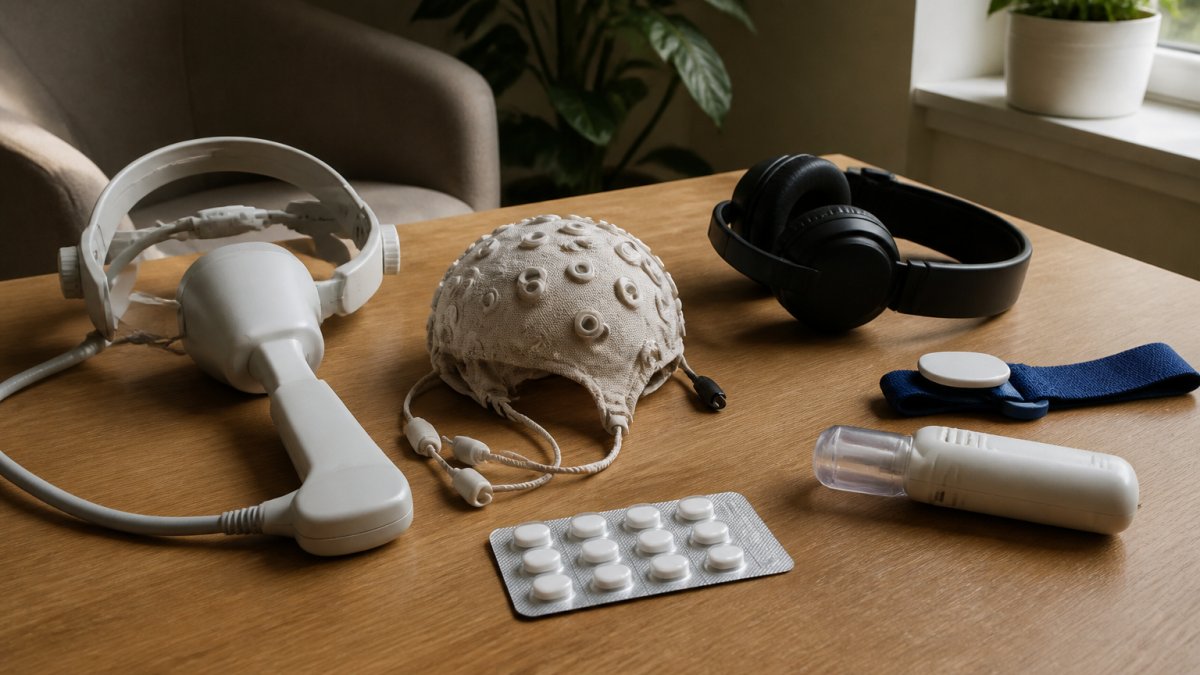
The two clinics overlap heavily on the treatments they advertise, TMS, Spravato (esketamine), and IV ketamine, but the practical differences show up in how each one structures eligibility, intake, and the treatment visit itself.
| Factor | Breakthru Psych | Relief Mental Health |
|---|---|---|
| Care model | Outpatient interventional psychiatry; advanced treatments offered alongside standard psychiatric care | Outpatient interventional psychiatry; advanced treatments offered alongside standard psychiatric care |
| TMS | Listed service; typically a series of daily weekday sessions over several weeks | Listed service; typically a series of daily weekday sessions over several weeks |
| Spravato (esketamine) | Listed service; REMS-certified clinic setting with required observation | Listed service; REMS-certified clinic setting with required observation |
| IV ketamine | Listed service; monitored infusion with post-infusion observation | Listed service; monitored infusion with post-infusion observation |
| Eligibility screening | Psychiatric evaluation plus prior antidepressant history | Psychiatric evaluation plus prior antidepressant history |
| Insurance | Varies by plan, state, and clinic; prior authorization common | Varies by plan, state, and clinic; prior authorization common |
| Locations | Multiple sites; confirm the specific clinic near you | Multiple sites; confirm the specific clinic near you |
| Intake | Direct inquiry, then screening and benefits check | Direct inquiry, then screening and benefits check |
Neither column should be treated as final. Availability shifts by state and by individual clinic, so confirm each line with the provider's own intake team before you plan around it.
How the treatments actually differ
The three advanced options are not interchangeable, and the differences drive who qualifies and what a week of treatment looks like:
- TMS (transcranial magnetic stimulation) uses focused magnetic pulses to stimulate underactive regions of the brain. It is non-invasive, requires no anesthesia, and is typically delivered as short daily weekday sessions over a course of several weeks. You can usually drive yourself home afterward.
- Spravato (esketamine) is an FDA-approved nasal spray for treatment-resistant depression in adults. It must be given in a certified clinic under a restricted distribution program because of the monitoring required, and the observation period after each dose is not optional.
- IV ketamine is delivered as a monitored infusion. It is not FDA-approved for depression in the same way Spravato is, so it is generally offered as an off-label treatment, and clinics vary in how they screen and monitor patients.
Eligibility and intake: what actually gates access
Most interventional psychiatry clinics, including these two, use a similar funnel before treatment starts:
- Diagnosis and history. A psychiatric evaluation confirms the diagnosis and documents which medications you have already tried, at what dose, and for how long.
- Treatment-resistant criteria. For Spravato specifically, the FDA-approved indication requires prior failure of at least two antidepressants. TMS and IV ketamine are often considered under similar "failed multiple trials" reasoning, though the exact threshold is a clinical judgment.
- Medical screening. Blood pressure history, cardiovascular concerns, seizure history, and current medications are reviewed because they affect eligibility for TMS, esketamine, and ketamine differently.
- Benefits check. The clinic's billing team verifies coverage and prior authorization requirements before scheduling.
Treatment logistics to compare
When you call either provider, ask how each of these works at the specific clinic you would attend:
- Visit frequency. TMS is typically daily on weekdays for several weeks; Spravato and IV ketamine are usually scheduled less often, with the cadence set by your response.
- Session length. TMS sessions are short; Spravato and IV ketamine require a longer monitored observation period afterward.
- Transportation. You should not drive after Spravato or IV ketamine, so plan a ride. TMS generally does not require this.
- Monitoring. Ask who is present during the session, how blood pressure is tracked, and what the protocol is if you have a reaction.
For a national picture of how these treatments fit into depression care, the National Institute of Mental Health overview of depression is a solid starting point.
Spravato Treatment for Depression: What to Expect
Spravato treatment for depression is an FDA-approved esketamine nasal spray used under medical supervision for adults with treatment-resistant depression. It is given in a certified clinic, not at home, because it requires monitoring.
A typical session follows a set rhythm:
- You complete a psychiatric evaluation and eligibility screening first
- The spray is self-administered under staff supervision
- You stay for observation, usually about two hours
- A clinician checks your blood pressure and watches for dissociation
- You arrange a ride home, since you should not drive afterward
The monitoring is the point. Esketamine can raise blood pressure and cause short-lived dissociation, which is exactly why it belongs in a clinical setting with a care team present.
Breakthru Psych vs Relief Mental Health Insurance and Cost Questions
Cost is where most people get stuck, and it is where the least public information exists. Neither provider posts a full, verified price list, and any specific dollar figure you see online for TMS, Spravato, or IV ketamine should be treated as a starting point, not a final number. What you can do is understand the mechanics well enough to ask the right questions.
How coverage for these treatments usually works
Advanced psychiatric treatments are covered differently from a standard therapy visit, and the differences matter:
- Medical vs. behavioral health benefits. TMS and Spravato are often processed under a plan's medical benefit rather than its behavioral health benefit, which can mean different deductibles, copays, and prior authorization rules. Ask the clinic which benefit category the treatment falls under for your plan.
- Prior authorization. TMS and Spravato almost always require prior authorization. That means the clinic submits clinical documentation, diagnosis, medication history, and prior treatment failures, and the insurer reviews it before approving. This step can take days to weeks, so start it early.
- Step therapy and documentation. Insurers typically want evidence that you have already tried and failed standard antidepressants. Keeping a clear record of which medications you tried, at what dose, and for how long makes the authorization process smoother.
- Parity protections. Federal parity rules require most plans that offer mental health benefits to cover them no more restrictively than medical or surgical benefits. The Centers for Medicare & Medicaid Services mental health coverage information explains how these rules apply to many plans.
- Self-pay. Some patients pay out of pocket when insurance denies coverage or when they do not want to wait through authorization. Self-pay arrangements vary by clinic and by treatment, so ask what a self-pay package includes, evaluation, the treatment itself, monitoring, and follow-up are not always bundled.
What to ask the billing team
When you call either provider, ask these questions directly and write down the answers:
- Is this specific treatment covered under my plan, and under which benefit?
- Does it require prior authorization, and who submits it?
- What is my out-of-pocket responsibility after insurance, deductible, copay, or coinsurance?
- Do you offer self-pay options, and what exactly do they include?
- If my plan denies coverage, what is the appeal process?
Why the numbers vary so much
Two patients at the same clinic can see very different out-of-pocket costs because of plan type, deductible status, network status, and state-level insurance rules. That is why a clinic's billing team should run a benefits check specific to your plan before you commit to a treatment schedule, a general price quote is not the same as your actual cost.
Questions to Ask a Psychiatrist Before You Commit
Questions to ask a psychiatrist should cover credentials, safety, and logistics, not just treatment names. The goal is to find out whether the clinic can actually handle a complex case like yours.
Bring this list to your first call or visit:
- Are your physicians board-certified in psychiatry?
- How much experience do you have with patients who have failed multiple antidepressants?
- What is your monitoring protocol during Spravato or ketamine sessions?
- How do you handle a bad reaction or a blood pressure spike?
- What is the realistic wait time for a first appointment?
A clinic that answers these clearly and without pressure is usually the one worth your time. Vagueness about safety protocol is the single biggest thing to watch for.
How to Choose a Mental Health Provider for Treatment-Resistant Depression
Choosing well comes down to fit, not branding. Treatment-resistant depression means standard antidepressants have not worked, so you need a provider set up for advanced therapies and careful monitoring.
Weigh four things:
- Scope. Can they offer TMS, Spravato, and IV ketamine, or only one?
- Access. How soon can they see you, and do they take your insurance?
- Safety. Is there a clear, monitored clinical process for every session?
- Fit. Do they treat your age group and your specific condition, whether that is depression, anxiety, OCD, or PTSD?
At Trust and Care Mental Health Inc, our focus is exactly this kind of care: treatment-resistant depression and mood symptoms, with FDA-approved Spravato esketamine administered in a monitored clinical setting.
If you are weighing options, the Substance Abuse and Mental Health Services Administration treatment locator can help you confirm what is available in your area before you decide.
Frequently Asked Questions
What treatments do Breakthru Psych and Relief Mental Health offer?
Both providers offer interventional psychiatry services, including transcranial magnetic stimulation (TMS), Spravato (esketamine), and IV ketamine. Neither provider publishes a complete, standardized treatment menu online, so confirm availability of specific therapies like Spravato or TMS at your nearest clinic before scheduling. A psychiatric evaluation determines which advanced treatment fits your history.
Does insurance cover treatment at Breakthru Psych or Relief Mental Health?
Coverage depends on your specific plan, the treatment type, and medical necessity documentation. Spravato has a dedicated FDA approval for treatment-resistant depression, and many commercial insurers cover it when prior authorization criteria are met. TMS and IV ketamine coverage varies widely. Contact your insurer directly with the CPT codes for the proposed treatment and ask whether the provider is in-network. Neither provider publishes universal self-pay rates, so request a cost estimate from the clinic before starting.
What should I ask a psychiatric provider before starting treatment?
Ask about the psychiatrist's board certification, their experience treating patients who have failed two or more antidepressants, and how they monitor side effects during Spravato or ketamine sessions. Request a written treatment plan with expected timelines and outcome measures. Confirm the total number of visits required, whether a therapist is included, and what happens if the first treatment does not work. Also ask how they coordinate with your existing prescriber if you are keeping your current psychiatrist.
How can I find a provider for treatment-resistant depression?
Start by asking your current psychiatrist or primary care physician for a referral to an interventional psychiatry clinic. Search for providers who explicitly list treatment-resistant depression, Spravato, TMS, or IV ketamine on their website. Verify that the clinic is licensed in your state and that the psychiatrist is board-certified. Check insurance participation before booking, and ask about wait times. If you are in Fairfield or Bridgeport, Connecticut, Trust and Care Mental Health Inc offers specialized treatment for treatment-resistant depression, including FDA-approved Spravato esketamine administration in a monitored clinical setting, and comprehensive medication management.
Finding the right interventional psychiatry provider is harder than it should be, especially when you are already exhausted from a long search. Trust and Care Mental Health Inc offers personalized treatment plans, FDA-approved Spravato esketamine in a monitored clinical setting, and care for patients of every age, from children to older adults. Get started with Trust and Care Mental Health Inc and take the next step toward steadier, better-supported mental health.