 how-to
What Does Spravato Treat Off-Label?
Last Updated: November 2, 2026
Quick Summary
Spravato off-label is studied for bipolar depression, anxiety disorders, PTSD, OCD, chronic pain, and substance use disorders, but none of these carry FDA approval. Evidence ranges from small controlled studies for bipolar depression to case reports only for OCD, and chronic pain data comes from ketamine, not the nasal spray.
- Spravato is FDA-approved only for treatment-resistant depression and MDD with acute suicidal ideation or behavior.
- Bipolar depression has small controlled and open-label studies, but manic switch risk requires close mood monitoring.
- Anxiety evidence is limited to small open-label studies and case reports, and symptoms can return between doses.
- Off-label use does not relax REMS rules: Spravato must still be given in a certified setting with monitoring.
- Ask your clinician to name the evidence grade for the specific condition before deciding on off-label treatment.
Table of Contents
- Spravato FDA-Approved Uses and What Off-Label Means
- Conditions Studied for Spravato Off-Label Use
- Spravato for Anxiety: What the Evidence Says
- Spravato for PTSD: Research and Cautions
- Spravato Treatment Risks and Monitoring in Off-Label Care
- How Off-Label Prescribing Decisions Are Made
- Step 1: Confirm the diagnosis and rule out mimics
- Step 2: Review what has already failed
- Step 3: Weigh the evidence grade for the specific use
- Step 4: Discuss risks, benefits, and alternatives openly
- Step 5: Document informed consent before starting
- How the REMS program constrains off-label use
- What shared decision-making actually looks like
- Questions to Ask Before Starting Spravato Off-Label
- Frequently Asked Questions
Spravato FDA-Approved Uses and What Off-Label Means
Spravato is an FDA-approved nasal spray for two specific depression uses, and any other use is considered off-label. For a plain-language primer on what the drug is and how it is used for depression, see How to Understand Spravato for Depression. Understanding this distinction helps set both safety considerations and expectations.
The drug is esketamine, a close chemical relative of ketamine. Its onset is often described as faster than standard oral antidepressants in published research. But speed does not mean it works for everything.
The two approved indications
The FDA has cleared Spravato for exactly two situations:
- Treatment-resistant depression in adults. This means at least two oral antidepressants have failed.
- Depressive symptoms in adults with major depressive disorder who have acute suicidal ideation or behavior. This use pairs the spray with an oral antidepressant.
Nothing else carries FDA approval. Not anxiety. Not PTSD. Not bipolar depression.
How off-label prescribing works
Off-label prescribing is the practice of using an FDA-approved drug for a condition, dose, or patient group the agency has not formally approved. It is legal and common in American medicine.
A doctor can prescribe Spravato off-label when they believe the evidence supports it. That decision rests on published research, clinical experience, and the patient's history. It does not require FDA sign-off for the new use.
Conditions Studied for Spravato Off-Label Use
Most pages that rank for this query stop at the two FDA-approved depression indications and never tell you which off-label uses have actual evidence behind them. This section does. The table below grades the evidence for each condition using a simple scale, controlled trials, small or open-label studies, case reports only, or ketamine-only data, so you can see where the support is strong and where it is thin.
A word on language first: "studied" is not the same as "proven," and "off-label" is not the same as "investigational." A use can be off-label and still have years of published research behind it. A use can also be off-label with almost nothing but anecdotes. The grade matters more than the label.
Evidence grade by condition
| Condition | Evidence grade | What the research actually shows | Key caveat |
|---|---|---|---|
| Treatment-resistant depression | FDA-approved (not off-label) | Two approved indications; multiple controlled trials | Requires at least two failed oral antidepressants |
| MDD with acute suicidal ideation or behavior | FDA-approved (not off-label) | Approved for depressive symptoms in this setting, paired with an oral antidepressant | Does not treat suicidality itself as a standalone indication |
| Bipolar depression | Small controlled and open-label studies | Some trials report rapid reduction in depressive symptoms; results are not uniform | Manic switch risk requires close mood monitoring |
| Anxiety disorders (generalized anxiety, social anxiety) | Small open-label studies and case reports | Rapid drops in anxious symptoms reported after dosing | Short follow-up; rarely controlled; symptoms can return between doses |
| PTSD | Small studies, mixed results | Some report reduced flashbacks and lower symptom scores; others show no clear benefit | Dissociation from the drug complicates monitoring in a population already prone to dissociation |
| Obsessive-compulsive disorder | Case reports only | Isolated reports of symptom reduction | No controlled trials specific to esketamine |
| Chronic pain | Ketamine-only data | Most evidence comes from ketamine infusions, not the esketamine nasal spray | Route, dose, and formulation differ; do not extrapolate |
| Substance use disorders | Early ketamine research | Some ketamine trials in alcohol use disorder; esketamine-specific data limited | Not a substitute for standard addiction treatment |
How to read the grades
- Controlled trials are the strongest signal. They compare the drug against a placebo or another treatment and reduce the chance that improvement is coincidence.
- Small or open-label studies show promise but cannot rule out placebo effect or natural recovery. They are hypothesis-generating, not practice-changing on their own.
- Case reports only describe individual patients. They are the weakest form of clinical evidence and should never be the sole basis for a treatment decision.
The esketamine-versus-ketamine distinction
A common error on competitor pages is treating esketamine and ketamine as interchangeable. They are not. Esketamine is the S-enantiomer of ketamine, formulated as a nasal spray and regulated under a specific risk program. Most of the off-label evidence for chronic pain and substance use comes from ketamine given intravenously or in other forms, not from the Spravato nasal spray.
If you are weighing the two options, our comparison of ketamine vs esketamine for depression breaks down the differences in formulation, monitoring, and approved uses.
Spravato for Anxiety: What the Evidence Says
Spravato for anxiety is not FDA-approved, and the evidence remains early-stage. Some small trials and case reports have described reductions in anxious symptoms after esketamine dosing.
A common mistake is assuming fast relief means durable relief. In practice, anxiety symptoms can return between doses.
The evidence is early-stage and unproven for this use. Anyone with an anxiety disorder should have a full clinical evaluation before considering an off-label medication.
Spravato for PTSD: Research and Cautions
Spravato for PTSD sits in a similar spot: interesting early signals, not enough proof. Some small studies report reduced flashbacks and lower symptom scores.
Watch out: PTSD often overlaps with depression and dissociation. Esketamine can cause dissociation on its own, which complicates monitoring in this group.
Esketamine is not an established PTSD treatment; it is a question to raise with a specialist who knows your full history.
Spravato Treatment Risks and Monitoring in Off-Label Care
Off-label Spravato carries the same core risks as approved use, and monitoring does not get looser just because the reason is different.
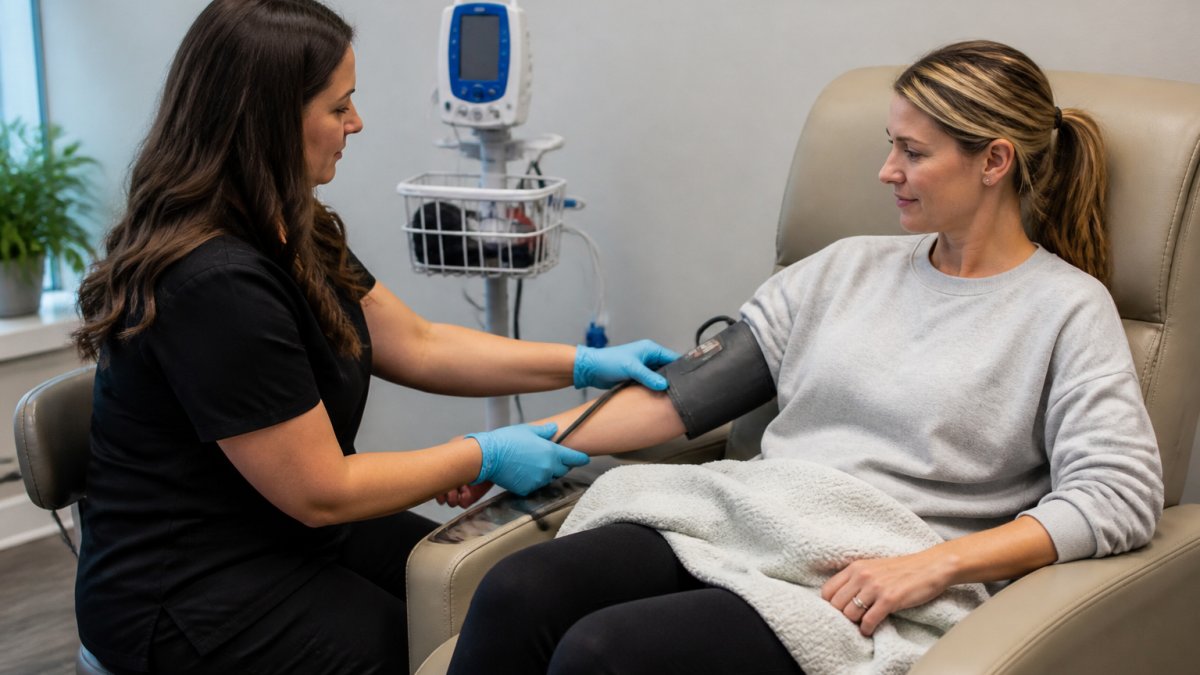
The main concerns include:
- Dissociation during and after dosing
- Blood pressure spikes that need tracking
- Sedation that rules out driving afterward
The FDA requires Spravato to be given only in a certified treatment setting under a risk program known as FDA REMS information for esketamine. That rule applies to off-label use too.
How Off-Label Prescribing Decisions Are Made
Off-label prescribing is legal in the United States, but that does not make it casual. A responsible decision follows a documented process that weighs evidence quality, your specific history, and the constraints of the drug's risk program. Here is what that process should look like, and what to expect from a clinician who is doing it well.
Step 1: Confirm the diagnosis and rule out mimics
Before any off-label discussion, the diagnosis has to be solid. Many conditions that look like treatment-resistant depression or anxiety have other explanations, thyroid disease, sleep apnea, substance use, bipolar spectrum illness, or medication side effects. A clinician who skips this step and jumps to an off-label prescription is skipping the most important part.
Step 2: Review what has already failed
Off-label use is not a first-line choice. The prescriber should document which approved treatments you have tried, at what dose, for how long, and why they did not work. For depression, that usually means at least two adequate trials of oral antidepressants before esketamine is considered at all, even for an off-label indication.
Step 3: Weigh the evidence grade for the specific use
This is where the quality of the decision is made or lost. A clinician should be able to tell you whether the support for the off-label use comes from controlled trials, small open-label studies, case reports, or ketamine-only data. A single case report is not the same as a randomized trial, and the consent conversation should reflect that difference.
Step 4: Discuss risks, benefits, and alternatives openly
Off-label consent is not a signature on a form. It is a conversation that covers:
- What the evidence supports, and what it does not
- The known risks, dissociation, blood pressure changes, sedation, and drug interactions
- The alternatives, approved medications, psychotherapy, neuromodulation, or simply waiting
Step 5: Document informed consent before starting
Informed consent for off-label use should be written down, not implied. The note should record the indication, the evidence discussed, the alternatives reviewed, and the patient's agreement. If a clinic cannot produce that documentation, that is a warning sign.
How the REMS program constrains off-label use
The FDA requires Spravato to be dispensed and administered only in a certified treatment setting under a Risk Evaluation and Mitigation Strategy (REMS) program. That requirement does not disappear because the reason for treatment is off-label. In practice, this means:
- The drug must be given under direct observation in a certified setting
- Patients are monitored for a period after dosing, as set by the REMS program and prescribing information
- Blood pressure and dissociation are assessed before and after each session
Unsupervised or at-home esketamine is not consistent with the REMS framework, regardless of the indication. For the official requirements, see the FDA REMS information for esketamine.
What shared decision-making actually looks like
Shared decision-making is not a slogan. It means the clinician presents the evidence in plain language, answers questions without steering, and respects a patient's choice to decline. It also means the clinician is willing to say "the evidence here is weak" when that is the truth. A patient who feels rushed, dismissed, or pressured has not given informed consent, even if they signed a form.
If you want to understand what monitoring involves in practice, our guide to Spravato side effects monitoring walks through the session-by-session checks.
Questions to Ask Before Starting Spravato Off-Label
Asking the right questions protects you, and any good clinician welcomes them. Bring this list to your consultation:
- What evidence supports this off-label use?
- How will you monitor dissociation and blood pressure?
- How long is each session, and how often?
On cost, coverage varies by plan and diagnosis. Coverage varies by plan and diagnosis, so check with your insurer and provider about what applies to you.
Off-label use of any medication deserves careful, honest discussion, not a rushed decision. Trust and Care Mental Health Inc offers Spravato esketamine administration in a monitored clinical setting, and provides services for adults, children, and older adults in the Fairfield area.
Frequently Asked Questions
Is Spravato FDA-approved for conditions other than depression?
No. Spravato is FDA-approved only for treatment-resistant depression in adults and for depressive symptoms in adults with major depressive disorder who have acute suicidal ideation or behavior. Any other use, including for anxiety or PTSD, is considered Spravato off-label. Off-label prescribing is legal and sometimes appropriate, but it means the FDA has not reviewed the drug for that specific condition. Your prescriber should explain the evidence and risks before proceeding.
Can Spravato help with anxiety or PTSD?
Some early research has explored esketamine for anxiety and PTSD, but the evidence is not strong enough for FDA approval. Studies are small and results are mixed. Spravato for anxiety or Spravato for PTSD should only be considered after a thorough evaluation by a psychiatrist who can weigh the potential benefits against the known risks, including dissociation and blood pressure changes. It is not a first-line treatment for either condition.
What should you avoid after Spravato treatment?
After a Spravato session, you should avoid driving or operating machinery until your clinician confirms you are ready, usually the next day. Avoid alcohol and sedating medications because they can worsen drowsiness and dissociation. Plan for a responsible adult to take you home. Your care team will give you specific instructions based on your response and any side effects you experience during the observation period.
How is off-label Spravato treatment decided and monitored?
A psychiatrist makes an off-label prescribing decision after reviewing your medical history, prior treatments, and the available evidence for your condition. You should discuss alternatives and give informed consent. During treatment, Spravato is given under supervision in a certified setting, with blood pressure and dissociation monitoring for at least two hours after each dose. Your response is tracked, and the plan is adjusted if benefits do not outweigh risks.